
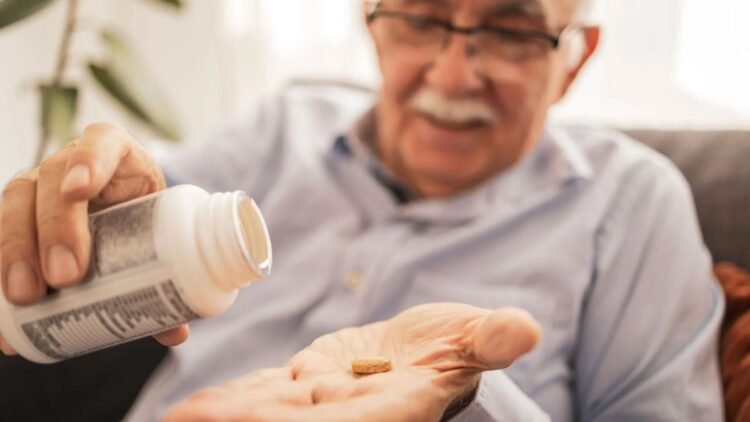
A recent scientific study has revealed that taking a daily multivitamin might modestly slow biological aging in older adults. Researchers found that seniors who consumed multivitamins consistently for two years appeared to age more slowly at the cellular level.
The research, conducted on 958 participants, suggests that multivitamins could influence the body’s internal aging process, though experts emphasize that this does not mean they extend lifespan. Instead, they may slightly improve the trajectory of long-term health.
Understanding the Difference Between Biological Age and Chronological Age
Chronological age simply reflects the number of years since a person’s birth. Biological age, however, measures how the body’s cells and tissues are aging due to factors like genetics, lifestyle habits, medical history, and environmental influences.
For instance, someone who is 50 years old chronologically might have a biological age that is younger or older depending on their overall health and lifestyle choices. Biological aging reflects the wear and tear on cells, organs, and tissues over time.
Experts say that these two measures do not always align. A healthy and active individual may biologically appear younger than their chronological age, while someone with health issues might age faster at a cellular level.
Key Findings From the Multivitamin Aging Study
Harvard Medical School and Brigham and Women’s Hospital researchers led a randomized trial involving 958 older adults. Participants took supplements daily over a two-year period.
During the 24-month study period, individuals who used multivitamins aged approximately 20 months biologically, meaning their cellular aging slowed by about four months compared to expectations.
However, the study’s senior author, Howard Sesso, emphasized that this finding should not be interpreted as adding four months to a person’s lifespan.
According to Sesso, the results suggest a potential improvement in long-term health patterns, though the exact real-world impact of those four months remains uncertain.
The COSMOS Trial and Study Design
The findings came from a large clinical research project called the COcoa Supplement and Multivitamin Outcomes Study (COSMOS). This trial was designed to determine whether cocoa extract and multivitamins could reduce risks of serious illnesses such as cancer and cardiovascular disease.
The research focused on healthy older adults, including:
- Men aged 60 years and older
- Women aged 65 years and older
- Average participant age: 70 years
Participants were randomly assigned to one of four daily supplement groups:
- Cocoa extract combined with a multivitamin
- Multivitamin only
- Cocoa extract only
- Placebo (inactive pills)
Funding for the study was partly provided by Haleon (formerly Pfizer Consumer Healthcare), which supplied the multivitamins, and Mars Inc., which supplied cocoa extract. The companies had no role in the study design.
Measuring Aging Through Epigenetic Clocks
After two years, scientists used five epigenetic clocks to measure biological aging among participants. These tools analyze subtle DNA changes over time and are considered advanced biomarkers for aging research.
Compared with the placebo group, individuals taking multivitamins showed slightly slower aging on two of the five biological markers:
- PCGrimAge clock: showed aging slowed by about 1.4 months
- PCPhenoAge clock: showed aging slowed by about 2.6 months
Both clocks are considered second-generation biomarkers designed to estimate mortality risk and long-term health outcomes.
Interestingly, participants who already showed signs of accelerated biological aging at the start of the trial experienced even greater improvements. Their PCGrimAge aging slowed by around 2.8 months.
The results were published in the scientific journal Nature Medicine.
Cocoa Extract Showed No Impact on Biological Aging
Although cocoa extract was included in the trial, researchers found no measurable effect on biological aging across any of the five epigenetic clocks.
This suggests that, within this study, multivitamins — not cocoa extract — were associated with the observed aging differences.
Why Experts Say the Findings Should Be Interpreted Carefully
Scientists caution that the results are modest and preliminary.
According to aging researcher Daniel Belsky from Columbia University, there is currently no single gold-standard method to measure aging.
Biological aging reflects the gradual decline in the body’s ability to maintain healthy cells, tissues, and organs. This deterioration increases the risk of chronic illnesses and death over time.
Another expert, Danica Chen of University of California, Berkeley, noted that while the biomarkers used in the study are cutting-edge, more research is needed before scientists can recommend multivitamins specifically to slow aging.
Researchers still do not know whether multivitamins directly improve tissue function or significantly reduce disease risk.
Limitations of the Study
Although the findings are promising, the study has several limitations:
- The research lasted only two years, which is relatively short for aging studies.
- Most participants were white and generally healthy, limiting diversity.
- It is unclear whether people with chronic illnesses would experience the same benefits.
- Multivitamins contain many nutrients, making it difficult to determine which specific ingredient might influence aging.
Experts say longer studies involving more diverse populations are needed.
Why Older Adults Might Benefit From Supplements
Healthy aging is complex and influenced by multiple lifestyle factors. Researchers emphasize that multivitamins are not a replacement for a nutritious diet.
Still, older adults may face challenges that make supplementation helpful.
Registered dietitian Joanne Slavin from the University of Minnesota explained that aging can make daily nutrition more difficult. Some seniors struggle with tasks such as opening food packaging, reading labels, or preparing meals.
Rising food prices may also contribute to nutritional gaps. According to U.S. data, food prices in January increased 2.9% compared with January 2025, while supermarket prices rose 2.1%.
Additionally, certain nutrient deficiencies become more common with age. For example:
- The body’s ability to absorb vitamin B12 decreases over time.
- Adults 75 years and older face a higher risk of B12 deficiency.
Because multivitamins contain a combination of nutrients, they may help fill potential nutritional gaps for some older adults.
The latest research suggests that taking a daily multivitamin may slightly slow biological aging in older adults, potentially improving the trajectory of long-term health. However, the effects observed in the study were modest, and experts stress that multivitamins should not be seen as a miracle solution for aging.
Healthy aging still depends on a balanced diet, active lifestyle, and proper medical care. While multivitamins might offer some support—especially for older adults facing nutritional challenges—individual decisions about supplements should always be made in consultation with a healthcare professional.